


A herniated disc can sound like an injury that will only get worse without surgery. Fortunately, that is not always the case. Many herniated discs improve over time, and some actually shrink as the body gradually absorbs portions of the displaced disc material.
How well a disc heals depends on several factors, including where the herniation is located, whether a nerve is compressed, and the symptoms it is causing.
What Happens When a Disc Herniates?
The discs between the vertebrae help absorb stress and allow the spine to move. Each has a tougher outer layer surrounding a softer center.
A herniated disc develops when some of the inner disc material pushes through or beyond the outer layer. If that material irritates or compresses a nearby nerve, it can cause pain, tingling, numbness, or weakness.
Herniated discs are most common in the lower back, although they can also occur in the cervical spine.
Can the Body Actually Heal a Herniated Disc?
Yes, in some cases. The body has several ways of reducing the effects of a disc herniation.
One reason is spontaneous resorption, where the body gradually breaks down and absorbs some of the herniated disc material. Certain types of herniations may be more likely to shrink over time than others.
At the same time:
- Inflammation surrounding the nerve can decrease.
- Pressure on the affected nerve may lessen.
- The nerve itself can begin to recover.
- Pain and other symptoms may gradually settle.
A disc does not necessarily need to return to exactly the way it looked before the herniation for a patient to feel better.
How Long Does a Herniated Disc Take to Heal?
There is no exact timeline. Some people notice improvement within a few weeks, while others may need several months.
Recovery depends on factors such as the location of the herniation, the degree of nerve irritation, and how symptoms respond over time. What matters most is whether symptoms are gradually moving in the right direction.
What Are Signs That a Herniated Disc Is Getting Better?
Recovery is usually gradual rather than sudden. Signs of improvement may include:
- Less neck or back pain
- Reduced pain traveling into an arm or leg
- Less tingling or numbness
- Better tolerance for sitting, standing, or walking
- Gradual return of strength
Symptoms can still fluctuate during recovery, so an occasional worse day does not necessarily mean the disc has become more damaged.
Does a Herniated Disc Need Treatment to Heal?
Not every herniated disc requires an operation. When there is no progressive neurological problem or other urgent concern, the initial approach often gives the body time to recover while controlling symptoms and maintaining function.
Depending on the individual, care may involve temporary activity modification, medication, physical therapy, or an injection. The specific approach should be based on the patient's symptoms rather than the MRI alone.
Prolonged inactivity is generally not the goal. As symptoms allow, gradually returning to normal movement and activity can be an important part of recovery.
Why Do Some Herniated Discs Not Improve on Their Own?
Natural healing is common, but not every herniated disc improves on its own. Symptoms may persist when there is ongoing nerve compression, significant inflammation, or another spinal condition contributing to the problem.
More concerning signs include:
- Increasing muscle weakness
- Persistent or severe radiating pain
- Worsening numbness
- Difficulty walking or performing normal activities
- Symptoms that continue despite appropriate conservative care
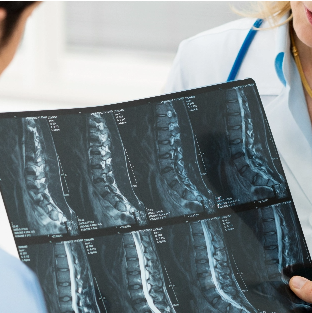
That’s why an MRI is only one piece. A herniated disc may show up clearly on imaging without explaining every symptom, and even a larger herniation does not always mean surgery is needed.
When Does a Herniated Disc Need Surgery?
Surgery may be considered when symptoms are not improving with conservative care or when nerve compression is causing worsening neurological problems, such as increasing weakness.
For many patients, there is time to monitor recovery before considering surgery. The decision depends on how symptoms are progressing and whether nerve function is being affected.
Do You Need Another MRI to See If the Disc Healed?
Not necessarily. If symptoms are steadily improving, another MRI may not change the treatment plan. A person can feel substantially better even when some evidence of the herniation remains on imaging.
Repeat imaging may be more useful when:
- Symptoms become significantly worse
- New weakness or numbness develops
- Recovery stops progressing
- New symptoms appear
- Updated imaging is needed to make a treatment decision
The goal is not simply to make an MRI look normal. It is to restore comfort, neurological function, and the ability to return to normal activities.
When Should You See a Spine Specialist?
A herniated disc deserves further evaluation when symptoms are severe, persistent, or moving in the wrong direction.
Seek prompt medical care for increasing weakness, major changes in sensation, difficulty walking, or changes in bowel or bladder control. These symptoms can indicate more significant nerve compression and should not simply be watched at home.
For less urgent symptoms, an evaluation can help determine whether the disc appears to be following an expected recovery pattern or whether something else is contributing to the problem.
Most Herniated Discs Do Not Automatically Mean Surgery
A herniated disc can heal or become significantly less symptomatic without surgery. In many cases, inflammation decreases, pressure on the nerve improves, and the herniated material itself may shrink over time.
The key is knowing when the spine is recovering normally and when persistent or worsening symptoms warrant a closer look.
If you are dealing with ongoing pain, numbness, weakness, or limited mobility from a herniated disc, Dr. Jeremy Smith can provide a comprehensive evaluation and help determine the appropriate next step. Schedule a consultation to get started.