

Spondylolisthesis and spondylosis sound similar, but they describe two different spinal conditions. Spondylosis involves degenerative changes within the spine. Spondylolisthesis occurs when one vertebra slips out of its normal position.
Both conditions can cause back pain, stiffness, and nerve symptoms. They can also develop at the same time, which is why an accurate diagnosis matters.
What Is Spondylosis?
Spondylosis is a broad term for age-related wear and tear affecting the spine. It may involve the intervertebral discs, facet joints, bones, and supporting ligaments.
These changes can occur in the neck, mid-back, or lower back. As degeneration progresses, the discs may lose height and the facet joints may develop arthritis. Bone spurs can also form around the affected area.
Spondylosis may contribute to:
- Neck or back stiffness
- Aching pain
- Reduced flexibility
- Disc degeneration
- Facet joint arthritis
- Bone spur formation
- Spinal stenosis
- Nerve compression
Degenerative changes do not always cause symptoms. Some people have clear signs of spondylosis on an X-ray or MRI but experience little or no pain.
What Is Spondylolisthesis?
Spondylolisthesis occurs when one vertebra slips out of alignment, usually forward over the vertebra below it. It most often affects the lumbar spine. Mild cases may cause no symptoms, while a larger or unstable slip can narrow the space around the nerves and lead to back or leg pain.
Several forms of spondylolisthesis exist:
- Degenerative spondylolisthesis: Age-related changes weaken the discs, joints, and ligaments that stabilize the spine.
- Isthmic spondylolisthesis: A defect or stress fracture develops in a portion of the vertebra called the pars interarticularis.
- Congenital spondylolisthesis: The condition is associated with spinal anatomy that developed before birth.
- Traumatic spondylolisthesis: A fracture or significant injury causes the vertebra to shift.
- Post-surgical spondylolisthesis: Changes in spinal support following a previous procedure may contribute to instability.
Degenerative and isthmic spondylolisthesis are among the most commonly discussed forms.
The Main Differences Between Spondylosis and Spondylolisthesis
The simplest way to understand the difference is to consider what is happening inside the spine.
Spondylosis Usually Involves:
- General wear and tear
- Disc degeneration
- Arthritis of the facet joints
- Bone spur development
- Loss of spinal flexibility
- Narrowing around the nerves
Spondylolisthesis Usually Involves:
- Movement of a vertebra out of alignment
- Possible spinal instability
- Narrowing around the spinal nerves
- Lower back or leg symptoms
- Changes in posture or walking tolerance
Spondylosis is primarily a degenerative process. Spondylolisthesis is an alignment problem. However, the two can be closely connected.
Can You Have Both Conditions?
Yes. Spondylosis and spondylolisthesis can develop in the same area of the spine.
As the discs and facet joints wear down, the structures that normally stabilize the vertebrae may become less effective. This can allow one vertebra to gradually slide forward. The result is degenerative spondylolisthesis.
For example, a patient may have arthritic facet joints, reduced disc height, and an L4-L5 vertebral slip. Together, these problems may cause spinal stenosis and place pressure on the nerves traveling into the legs.
Having both conditions does not automatically mean surgery is needed. Treatment depends on the symptoms, degree of instability, neurological findings, and effect on daily life.
How Do the Symptoms Compare?
The symptoms of spondylosis and spondylolisthesis often overlap. Either condition can cause:
- Neck or lower back pain
- Stiffness
- Reduced range of motion
- Numbness or tingling
- Muscle weakness
- Pain traveling into an arm or leg
- Difficulty standing or walking for long periods
Spondylosis may be more closely associated with general stiffness and aching. Symptoms can worsen after prolonged inactivity or certain repetitive movements.
Spondylolisthesis may cause lower back pain, tight hamstrings, leg heaviness, or pain that becomes more noticeable while standing and walking. Some patients also describe a sense that the lower back is unstable.
When spinal nerves are compressed, either condition may cause radiculopathy. In the lumbar spine, this can produce sciatica-like pain that travels through the buttock and leg.
Symptoms alone are not enough to confirm which condition is responsible. A physical examination and appropriate imaging are usually needed.
What Causes These Conditions?
Spondylosis is most often related to the cumulative effects of aging and spinal use. Genetics, previous injuries, smoking, repetitive physical stress, and certain occupational demands may also affect how quickly degeneration develops.
Spondylolisthesis can have several causes. In adults, it frequently develops when degeneration weakens a spinal segment. In younger people and athletes, it may be associated with a pars stress fracture caused by repeated extension of the lower back.
It is also important not to confuse spondylosis with spondylolysis.
Spondylolysis is a defect or stress fracture in the pars interarticularis. If the defect allows a vertebra to shift, it may lead to isthmic spondylolisthesis.
How Are Spondylosis and Spondylolisthesis Diagnosed?
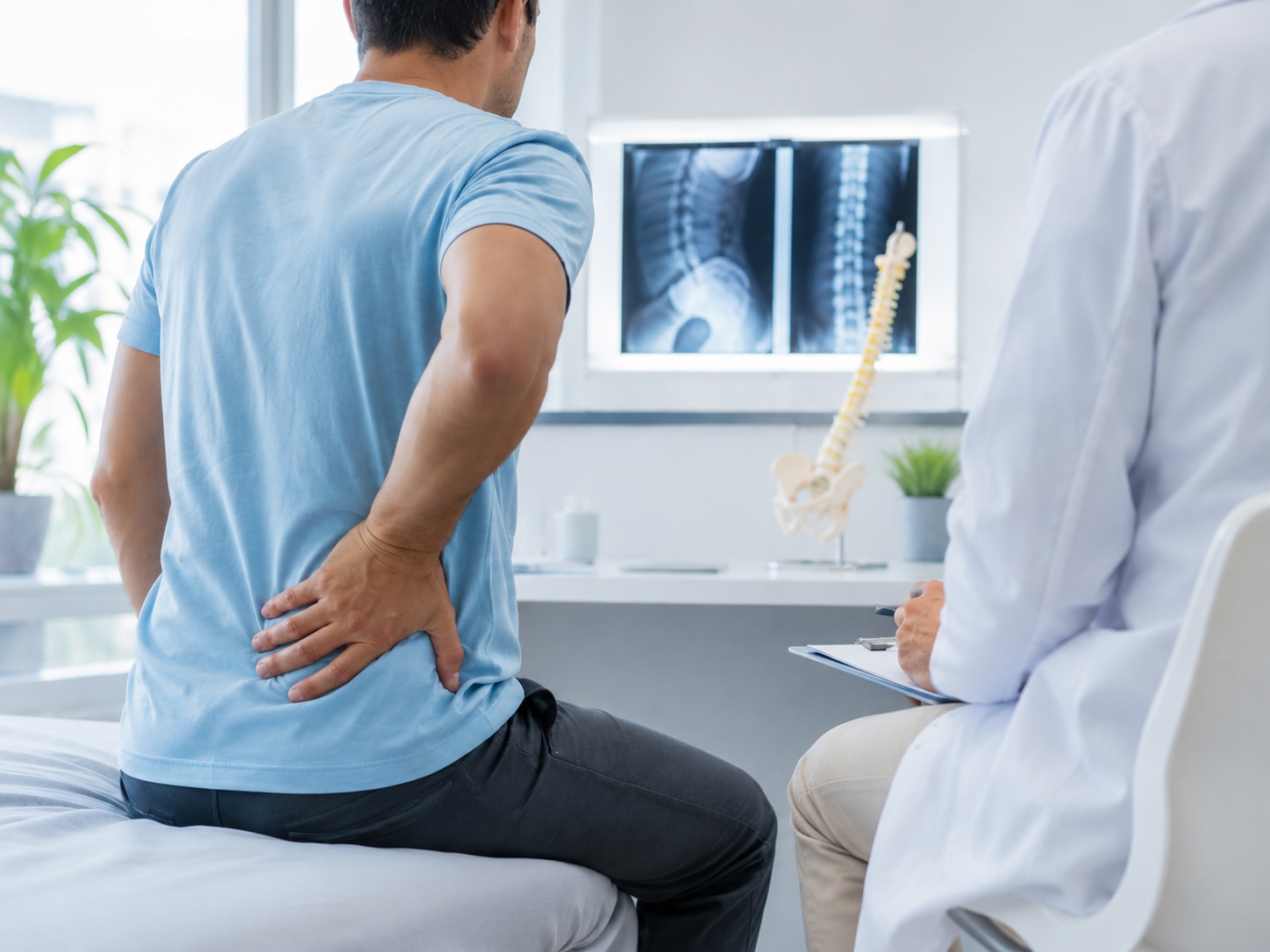
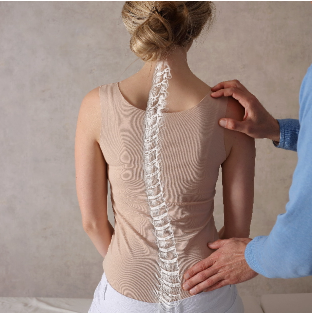
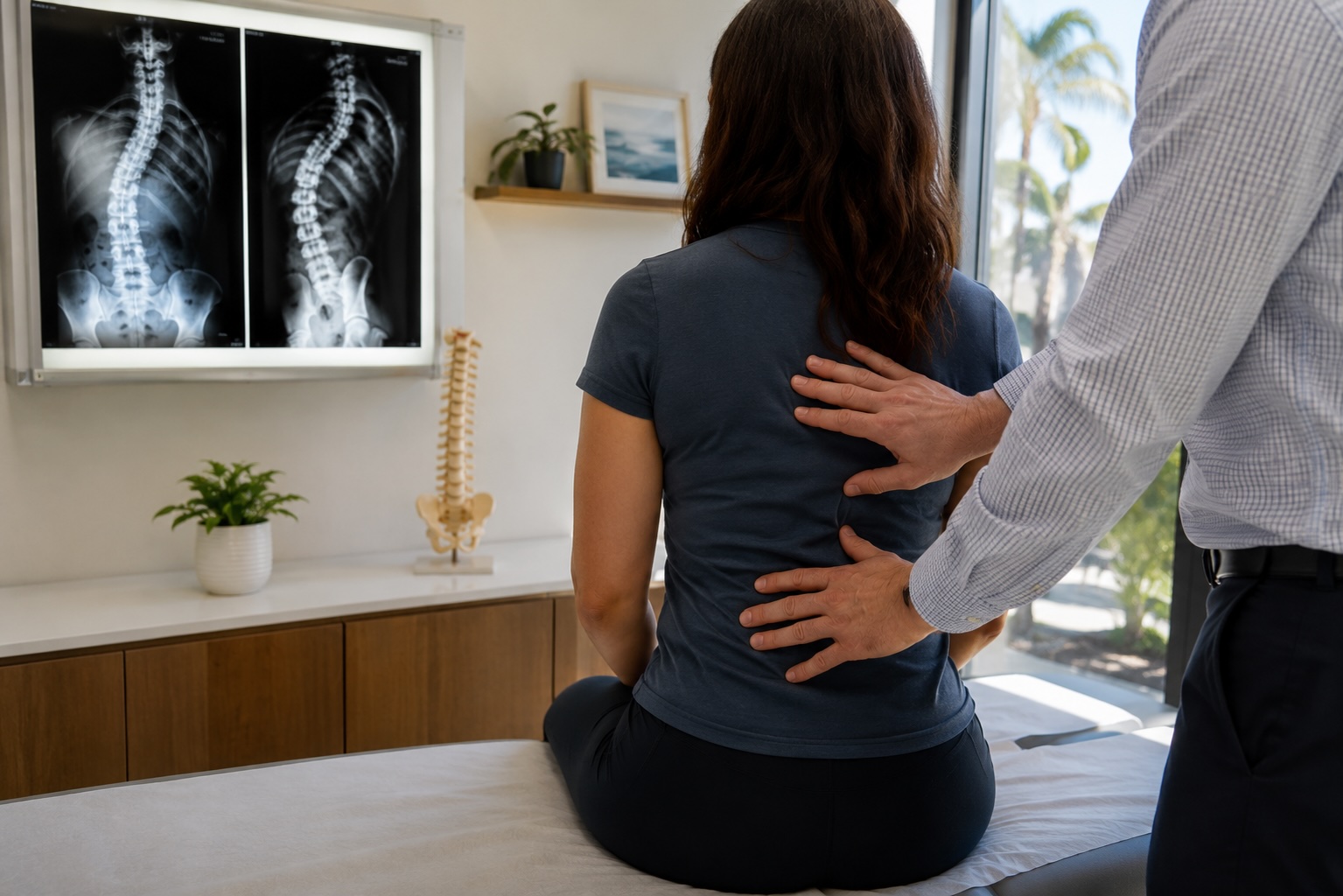
Diagnosis begins with a review of the patient’s symptoms, medical history, and previous treatments. A spine specialist may evaluate posture, gait, range of motion, muscle strength, reflexes, and sensation.
Imaging may include:
- X-rays: Show vertebral alignment, disc height loss, arthritis, and bone spurs.
- Flexion-extension X-rays: Evaluate whether a vertebra moves excessively when the spine bends forward and backward.
- MRI: Shows the discs, spinal nerves, spinal canal, and other soft tissues.
- CT scans: Provide a more detailed view of the vertebrae and other bony structures.
Because degenerative changes are common, imaging results must be considered alongside the patient’s symptoms and physical exam. Not every abnormal finding is the true source of pain.
How Are They Treated?
Treatment is personalized. The diagnosis matters, but so do the severity of symptoms, spinal stability, nerve function, and the patient’s daily goals.
Non-Surgical Treatment
Many patients begin with conservative care, such as:
- Physical therapy
- Core strengthening
- Activity modification
- Posture and movement training
- Anti-inflammatory or pain medication
- Heat or ice
- Targeted spinal injections
These treatments may reduce inflammation, improve spinal support, and help patients return to normal activities.
Conservative treatment cannot remove established arthritis or physically reposition a slipped vertebra. It can, however, control symptoms effectively for many patients.
When Surgery May Be Considered
Surgery is generally reserved for patients whose symptoms remain limiting despite appropriate non-surgical care.
A surgical evaluation may be appropriate when there is:
- Persistent or severe pain
- Progressive numbness or weakness
- Significant spinal stenosis
- Painful instability
- Difficulty standing or walking
- Progressive vertebral slippage
- Loss of bowel or bladder control
Depending on the condition, surgery may involve decompression to create more room for the nerves, fusion to stabilize an unstable segment, or a combination of procedures.
Not everyone with spondylosis or spondylolisthesis needs surgery. Many cases can be managed successfully without an operation.
Which Condition Is More Serious?
Neither condition is automatically more serious than the other.
Mild spondylosis may cause no symptoms, while advanced degeneration can lead to substantial nerve or spinal cord compression. A low-grade spondylolisthesis may remain stable for years, while a more severe slip can cause instability and significant neurological symptoms.
The seriousness of either condition depends on:
- The location of the problem
- The degree of degeneration or slippage
- Whether nerves are compressed
- Whether the spine is unstable
- Whether symptoms are progressing
- How much the condition affects daily activities
Frequently Asked Questions
Is spondylosis the same as arthritis?
Spondylosis commonly includes osteoarthritis of the spine. However, the term may also describe degeneration affecting the spinal discs, bones, and ligaments.
Is spondylolisthesis the same as a slipped disc?
No. Spondylolisthesis involves movement of a vertebra. A herniated or “slipped” disc occurs when disc material moves beyond its normal position.
Can spondylosis cause spondylolisthesis?
It can contribute to it. Degenerative changes may weaken the discs, joints, and ligaments that stabilize a spinal segment, allowing a vertebra to slip. Not everyone with spondylosis develops spondylolisthesis.
Can either condition cause sciatica?
Yes. Both conditions can narrow the space around a lumbar nerve and cause pain, tingling, numbness, or weakness that travels into the buttock or leg.
Does spondylolisthesis always require surgery?
No. Stable slips and mild symptoms can often be managed with physical therapy, medication, activity changes, and other non-surgical treatments.
Get an Accurate Diagnosis
Spondylosis and spondylolisthesis can cause similar symptoms, but they are not the same condition. A comprehensive evaluation can determine whether degeneration, instability, nerve compression, or a combination of problems is responsible.
Dr. Jeremy Smith evaluates and treats spondylolisthesis, spondylosis, spinal stenosis, and other complex spinal conditions. Schedule a consultation with Dr. Jeremy Smith at his Orange or Irvine, California office.