

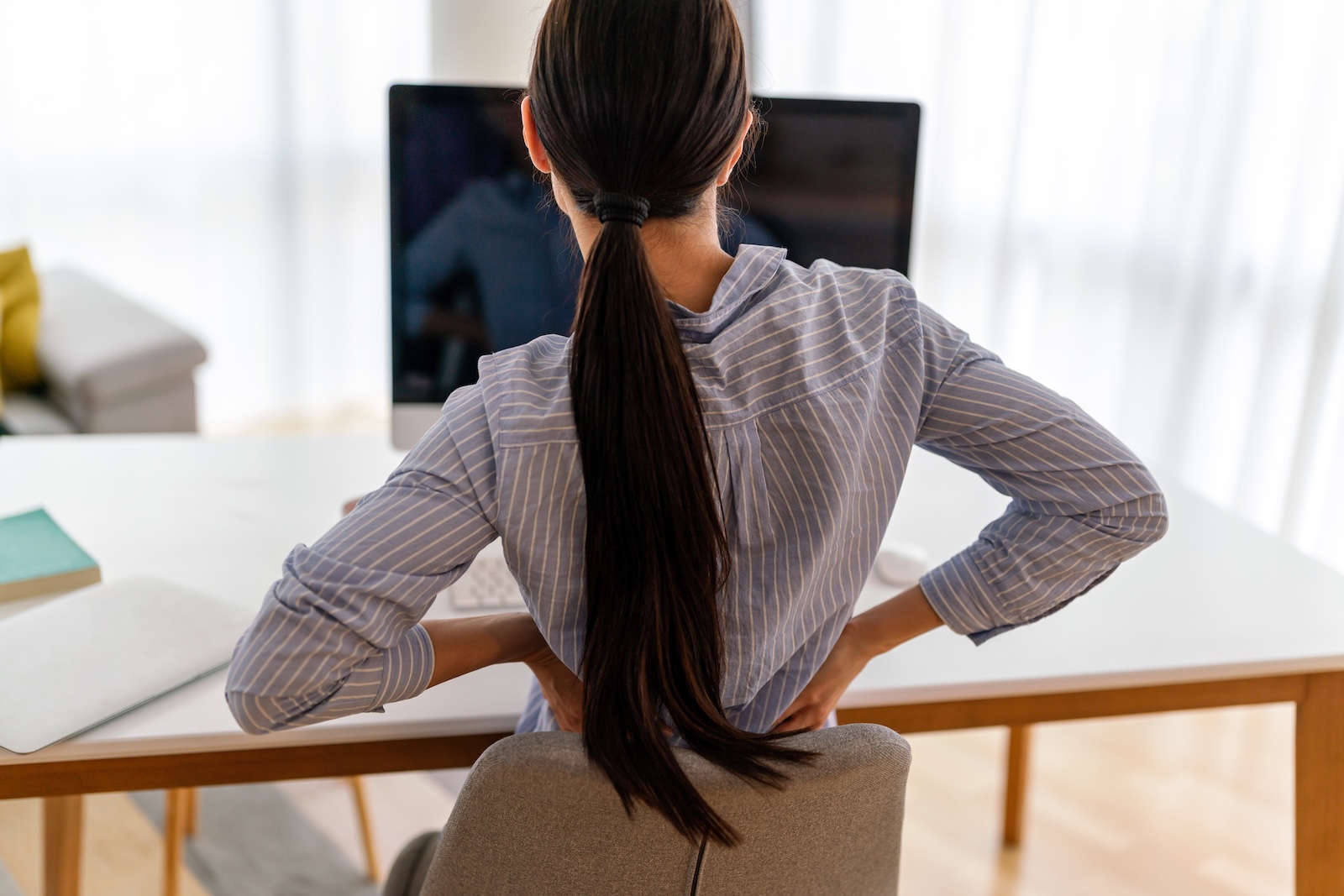
If you have noticed that your back feels stiffer than it used to, or that long walks, yardwork, or even If you sit for work, you’ve probably felt it at some point: that tight, achy, discomfort after hours at a desk. Low back pain is one of the most common complaints I hear from people who spend their days in front of a computer. The frustrating part is that many patients assume the pain must mean something is “wrong” structurally, when in reality it often starts with a few everyday habits that quietly add up over time.
Prolonged sitting, poor posture, and an awkward workstation can place repeated stress on the lumbar spine. Add in fewer movement breaks and a core that isn’t being asked to do much during the day, and your lower back becomes the area that absorbs the workload your body was never designed to carry in one position for hours on end.
The good news is that desk-related back pain is often very responsive to small changes. When you understand what’s driving the discomfort, you can usually reduce it with smarter posture, a better setup, and simple, consistent movement.
Why Desk Jobs Commonly Cause Low Back Pain
Your lumbar spine is built to support your upper body and allow you to bend, twist, and move. What it does not love is being held in one position for long periods, especially if that position is slouched or unsupported.
A few things happen during long hours of sitting:
- Prolonged sitting increases pressure on the lumbar discs. Even if you feel relaxed, the discs and joints in the lower back can take on sustained load, particularly when you sit with a rounded spine.
- Slouching or leaning forward strains spinal joints and supporting muscles. When your head and shoulders drift forward, your lower back often collapses into a rounded posture. Muscles then work overtime trying to stabilize you, leading to fatigue and soreness.
- Limited movement reduces circulation and causes stiffness. Motion brings blood flow to muscles and keeps tissues gliding smoothly. Staying still for too long often creates a “rusty hinge” effect in the low back and hips.
- Weak core and back muscles make it harder to hold good posture. If the abdominal and glute muscles are not doing their share, the low back tends to compensate. That compensation can become painful over weeks and months.
How Poor Posture Affects the Spine
Posture isn’t about sitting rigidly upright. It’s about keeping your spine in a balanced position where joints and muscles are sharing the load evenly. When posture drifts, stress concentrates in a few areas.
Forward head posture increases stress throughout the spine. Even though the neck is most obvious, forward head posture often changes the entire chain, including the low back. The body responds by rounding and collapsing through the mid-back and pelvis.
Rounded shoulders strain upper back and neck muscles. This can contribute to tension, headaches, and mid-back tightness, which often leads people to “sink” even more into their chair.
Slumped sitting compresses spinal discs and can accelerate wear. A flexed, slouched position increases disc pressure and can irritate the structures that are already sensitive.
Habitual poor posture can create muscle imbalances. Over time, hip flexors shorten, glutes become underactive, and core muscles stop stabilizing efficiently. This pattern is common in people who sit most of the day, and it’s a frequent contributor to chronic low back pain.
How Ergonomics Can Protect the Lower Back
Ergonomics is simply arranging your workspace so your body doesn’t have to fight the setup. You don’t need a perfect “Instagram desk.” You need a workstation that supports your spine and keeps you out of the positions that trigger pain.
Chair Setup
Start with your chair, because it’s the foundation.
Use a chair with real lumbar support. Your lower back should feel supported, not flattened. If your chair doesn’t provide it, a small lumbar roll or even a folded towel placed behind the low back can help.
Adjust seat height so your feet rest flat on the floor. If your feet dangle, your pelvis tends to roll backward, pulling your low back into a slouched posture.
Aim for hips and knees at roughly the same level. Slightly higher hips can be comfortable for some people, but you want a stable pelvis that doesn’t tip backward.
Desk and Monitor Position
Your monitor position can make or break posture.
Keep the screen at eye level. If you’re looking down at a laptop, you’re almost guaranteed to hunch. Use a laptop stand or stacked books if needed.
Keep elbows at a comfortable 90-degree angle. Your shoulders should stay relaxed, not elevated. If your desk is too high or too low, your upper body will compensate.
Keyboard and Mouse Placement
Reaching forward seems minor until you do it 1,000 times a day.
Keep the keyboard and mouse close. Your hands should fall naturally in front of you without leaning your chest toward the desk.
Support arms and wrists. If your forearms have nowhere to rest, shoulders and upper back tighten, which often changes how you sit through your mid-back and pelvis.
Work Habits
Even perfect ergonomics won’t save you if you sit the same way for hours.
Avoid crossing legs. It rotates the pelvis and can create asymmetrical tension in the low back and hips.
Keep hips aligned with shoulders. Think “stacked,” not stiff. If you catch yourself leaning to one side, reset.
Simple Exercises to Reduce Desk-Related Back Pain
Movement is one of the most effective tools for desk-related low back pain. It does not need to be intense. It needs to be consistent.
Below are simple options that many patients tolerate well. Move within comfort. Sharp pain is a signal to stop and adjust.
Gentle Stretching
These help reduce stiffness and restore mobility in areas that tighten with sitting.
- Seated spinal twists: Sit tall, gently rotate your upper body to one side while keeping hips stable, then switch.
- Hip flexor stretches: Tight hip flexors can pull the pelvis forward and irritate the low back. A gentle lunge stretch often helps.
- Hamstring stretches: Tight hamstrings can contribute to pelvic positioning that increases low back strain.
Strengthening Exercises
Strengthening supports posture and reduces the load the low back has to “carry” alone.
- Core tightening exercises: Think of gently bracing your abdomen as if preparing for a cough, without holding your breath.
- Glute bridges: Activating the glutes helps support the pelvis and takes pressure off the low back.
- Pelvic tilts: Slow, controlled tilts can reduce stiffness and improve awareness of neutral spine positioning.
Movement Breaks
The simplest strategy is often the most effective: stand up and move.
- Walk for a few minutes every hour
- Stand during phone calls
- Do light mobility movements throughout the day (gentle back bends, hip circles, shoulder rolls)
These small movements increase circulation, reduce stiffness, and help your spine reset.
Other Helpful Habits to Support a Healthy Spine at Work
Desk habits don’t exist in isolation. A few additional strategies can make a noticeable difference in how your back feels.
- Stay hydrated. Spinal discs rely on fluid balance. Dehydration won’t “cause” back pain by itself, but hydration supports overall tissue health.
- Use a sit-to-stand desk if available. The goal isn’t to stand all day. Alternating positions is often the sweet spot.
- Wear supportive shoes if you stand for long periods. Poor footwear can change alignment up the chain, including the pelvis and low back.
- Maintain an active lifestyle outside of work. Walking, strength training, and mobility work all help counterbalance the effects of sitting.
When Desk Pain Signals a More Serious Spine Problem
A sore back after a long day is common. But certain symptoms suggest it’s time for a medical evaluation, especially if pain is progressing or interfering with daily life.
Consider being evaluated if you notice:
- Pain that lasts more than a few weeks, especially if it is not improving with basic changes.
- Pain radiating down the legs. This can be a sign of nerve irritation.
- Numbness, tingling, or weakness in the lower extremities. Neurologic symptoms deserve prompt attention.
- Difficulty standing or walking for long periods because of pain, heaviness, or weakness.
- Back pain after a fall or injury, particularly if it’s severe or worsening.
In many cases, the goal is to identify the driver of pain early and address it before it becomes a longer-term issue.
Why Choose Jeremy Smith, MD
Low back pain is common, but the cause is not always obvious. The most effective plan starts with an accurate diagnosis and a thoughtful approach to treatment.
Dr. Jeremy Smith offers:
- Expertise in diagnosing posture and ergonomics-related spine problems, including conditions that mimic “simple” desk pain.
- Fellowship training in both minimally invasive and complex spinal surgery, with treatment plans that prioritize conservative options when appropriate.
- Personalized care focused on prevention, function, and long-term spine health, not quick fixes.
Schedule a Consultation
Desk-related low back pain can often be managed with smart changes to posture, ergonomics, and consistent movement. If your pain is limiting your comfort, productivity, or ability to stay active, schedule a consultation with Dr. Jeremy Smith in Orange or Irvine for a personalized spine health evaluation.